

The Last Laugh
Colbert, Brooks, and why comedy history matters

Two things happened in the last couple of weeks that made significant comedy history. One, you probably heard about. The other may come as news to you. Both events underscore not only the power of comedy, but just how much it endures and how closely aligned it is with something we all value regardless of sense of humor: freedom.
I’ll start with the thing you’ve probably heard about: the forced farewell of Stephen Colbert and The Late Show. CBS insists it was a “purely financial decision.” You’re welcome to take their word for it, but you should know they’ve got a history. CBS also insisted the Smothers Brothers, who, as a reminder, criticized the Vietnam War, weren’t “meeting their obligations” to the network when they canceled that show in the late 1960s. Nobody, least of all Tom and Dick Smothers, believed that then. The story about Colbert holds even less water now.
Then or now, I prefer to call it what it is: censorship. In the case of Colbert, the move additionally smells every bit like a bribe, which is to say: it stinks.
In both cases, comedians did what comedians often do but we don’t often talk about: they spoke truth to power. In both cases, the comedians had a direct line to the American people, and the American people were not just tuning in and laughing at their jokes and enjoying the entertaining guests, but doing so in numbers that indicated growing support for the messages underneath the punchlines. Whether it was the Vietnam War then or the billionaire-facilitated criminal enterprise masquerading as a government now, we see a very clear effort by those in power to silence criticism.
Now to the moment in comedy history you may not have heard about. Famed writer, performer, producer, and filmmaker Mel Brooks, along with the National Comedy Center in Jamestown, NY, recently announced he is giving his entire career archive to the museum for preservation. This includes more than 150,000 documents going all the way back to the comedy notebooks he kept from when he served in the U.S. Army during World War II. It also includes materials like the original handwritten lyrics to the song “Springtime for Hitler” from the movie The Producers.
There are also more than 5,000 photographs, some of them rarely, if ever, seen. They include behind-the-scenes images from his movies including Blazing Saddles, Young Frankenstein, Spaceballs, History of the World: Part I, and more. Brooks’ 100th birthday is next month. All of this represents his life’s work, work that not only entertained audiences but shaped comedy and satire.
In one interview, Brooks said something that really stuck with me. He explained that one of humanity’s greatest weapons against tyranny is ridicule. One walk through the Comedy Center, past exhibits featuring the work of people like George Carlin, Lenny Bruce, and the Smothers Brothers, and you understand very quickly that he is right. You also start to understand why having a national archive of these materials is important.
Comedy is history’s laugh track. In the moment, it can help us get through tough times. In hindsight, it helps us understand our culture and ourselves: where we have been, how far we have come, and often, how far we still have to go. Comedy’s superpower is that it helps crack open the door to difficult conversations, letting in light and air. History shows us that while some approach this with curiosity and open minds, others scramble to slam the door shut.
When we look back at comedy that made an impact, we often find individuals who were not just clever, but courageous. Some were called things like outrageous or even immoral, sometimes sacrificing their careers or even their own freedom for the sake of their art. But what’s fascinating about comedy, what makes it work, and what the very best and most respected in the game cite as the key to success is: truth.
As Mel Brooks’ best friend, Carl Reiner, said, “the absolute truth is the thing that makes people laugh.”
This is why it endures. This is why that slammed door never stays shut for long. This is why we have a museum that celebrates comedy, an art form that’s been declared dead more times than I can count even in my lifetime. Ultimately, this is what allows me to continue to have some hope in a very unsettling moment where it appears censorship has won.
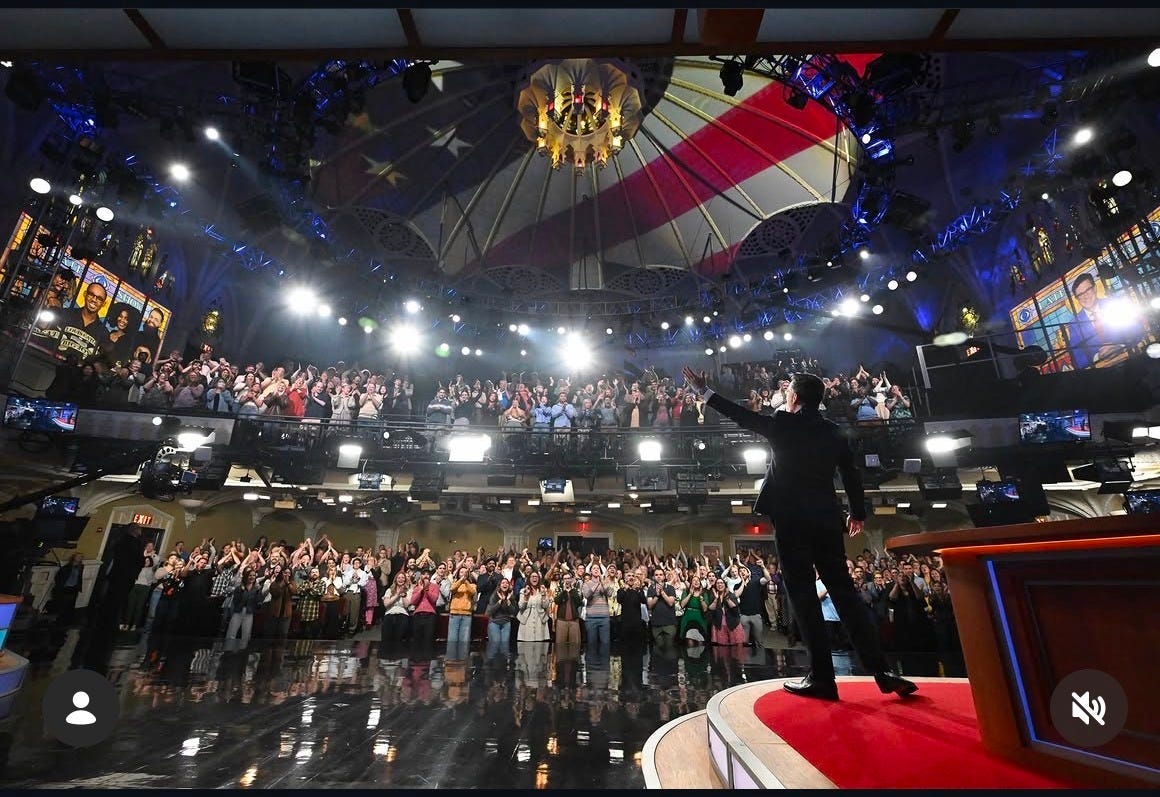
The end of The Late Show is the end of an era, to be sure, but the thing about endings is that they also signal new beginnings, reminding us that change is inevitable. Through it all, the truth always finds a way to come out. The joke’s on anyone who believes they can bury it.
This essay originally appeared in my column in the May 28, 2026 edition of the Perry Herald in Perry, NY. One additional note: I did work with the National Comedy Center full-time for a year and still do occasional paid media appearances to help promote the museum, however this is not a sponsored or paid post.
Ahead of an upcoming press tour, the Comedy Center gifted me a copy of the recently released book “Funny Stuff: How Comedy Shaped American History from the National Comedy Center and Smithsonian Institution.”
I’m looking forward to checking it out. The foreword is written by Mel Brooks. In it, he says that laughter can “blow the dust off your soul.” I love that.
Thankyou
Excellent and insightful look at the power of comedy to shine the light on truth. We certainly need it now, more than ever.